The Hidden System
That Helps Keep
You Alive.
Most people know the heart is important. Far fewer understand the real control system behind cardiovascular health, energy and longevity — and why it begins to change after the age of 40.
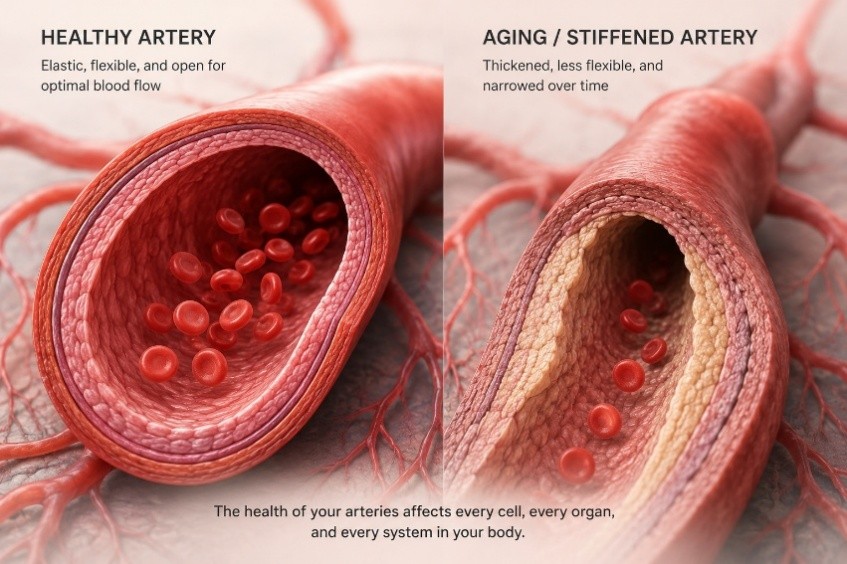
Your heart is a pump. But no pump works without healthy pipes.
Your cardiovascular system contains an estimated 37,000 to 62,000 miles of blood vessels. They deliver oxygen and nutrients to every organ, muscle and cell — and quietly carry waste away. As we age, this network gradually changes. Arteries become less flexible. Blood flow becomes less efficient. Energy may decline. Recovery slows.
Many people assume this is simply "getting older." But modern cardiovascular science shows there is a deeper biological process involved — one that revolves around a remarkable substance called nitric oxide, and a thin, delicate lining inside your blood vessels called the endothelium.
Meet the endothelium — your body’s "invisible organ."
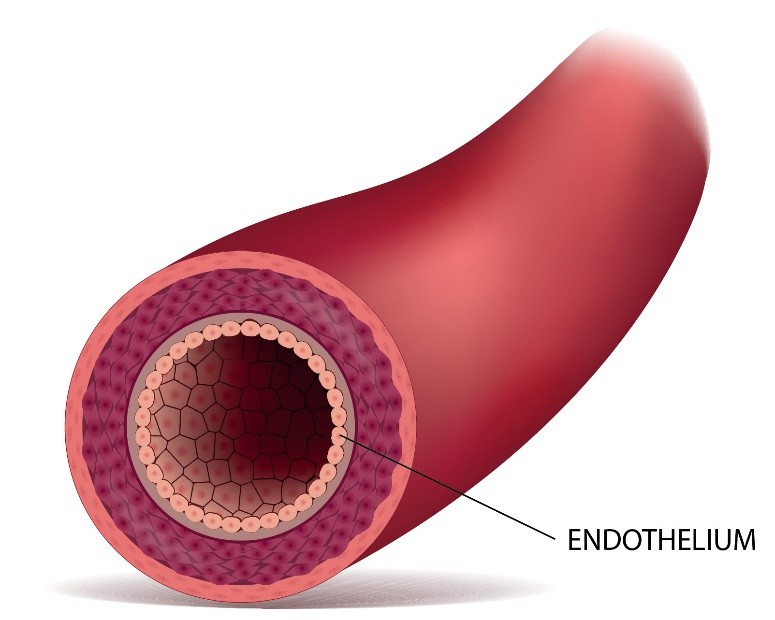
The endothelium is an ultra-thin layer of cells lining the inside of every blood vessel in your body. For decades, scientists believed it was simply passive "wallpaper" inside arteries. They were wrong.
Today, the endothelium is considered one of the body's most important regulatory systems — so influential it is now described by many researchers as a functioning organ in its own right.
The molecule that quietly keeps your arteries flexible.
In 1998, the Nobel Prize in Physiology or Medicine was awarded to three researchers — Robert F. Furchgott, Louis J. Ignarro and Ferid Murad — for discovering that the endothelium produces a tiny signaling molecule called nitric oxide (NO).
Nitric oxide signals your blood vessels to relax. It supports healthy circulation, oxygen delivery and vascular responsiveness — and is produced continuously by the body when conditions are favorable.
"Nitric oxide may well be the most studied molecule in the medical world — with well over 100,000 research papers published in the past two decades."
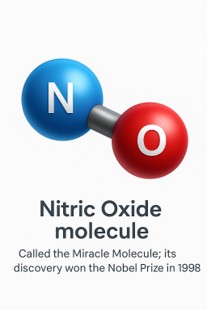
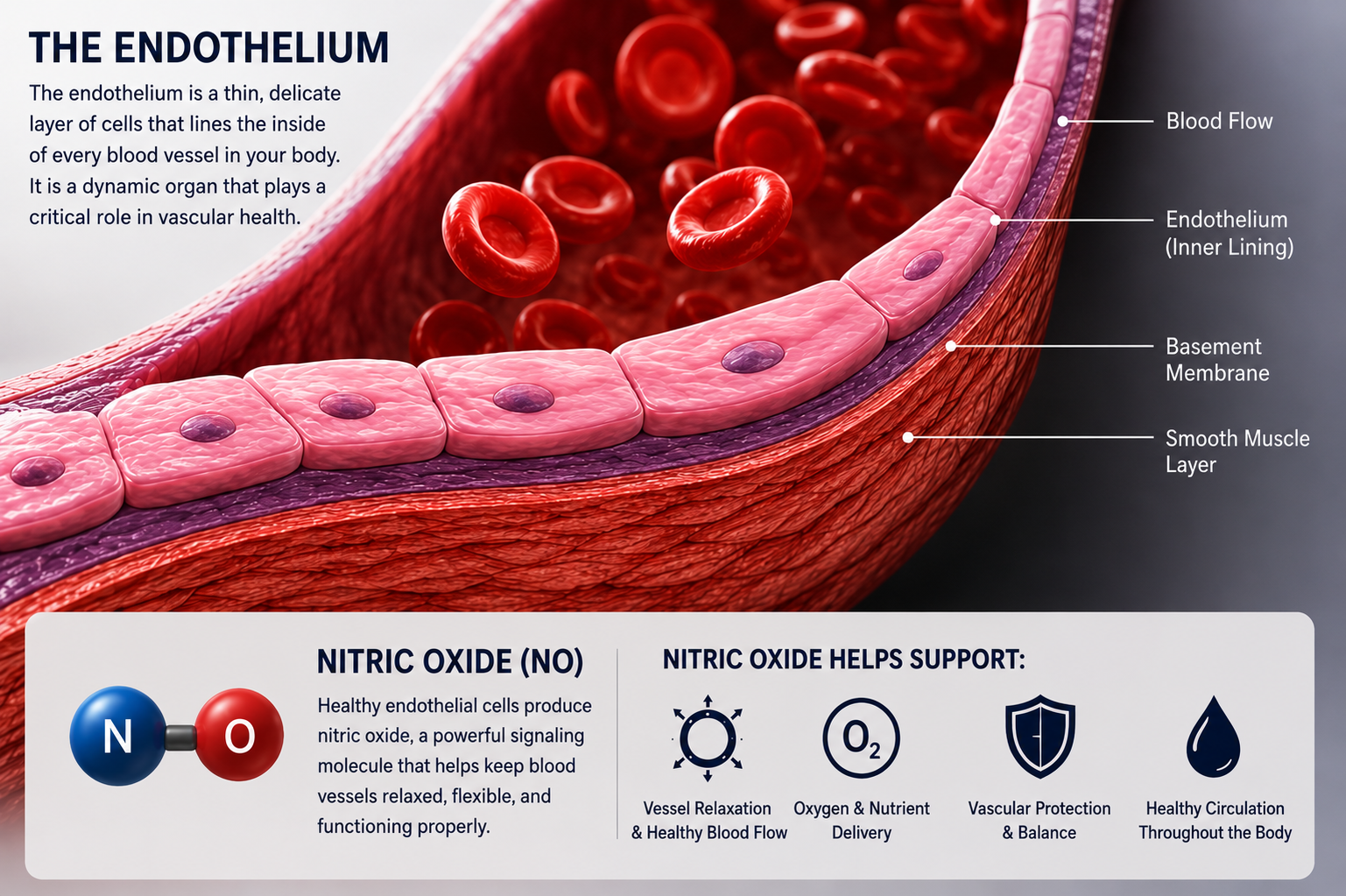
Fig. 3 — Endothelial structure and the supportive role of nitric oxide.
Why nitric oxide quietly declines as we age.
- ·Oxidative stress
- ·Sedentary lifestyle
- ·Poor diet
- ·Excess body fat
- ·Smoking
- ·Alcohol
- ·Chronic stress
- ·Reduced physical activity
- ·Metabolic dysfunction
- ·Normal aging processes
- ·Reduced circulation efficiency
- ·Lower exercise capacity
- ·Slower recovery
- ·Reduced physical performance
- ·Less vascular flexibility
- ·Lower perceived vitality and energy
These changes are not always immediately noticeable. They often occur gradually — over many years.
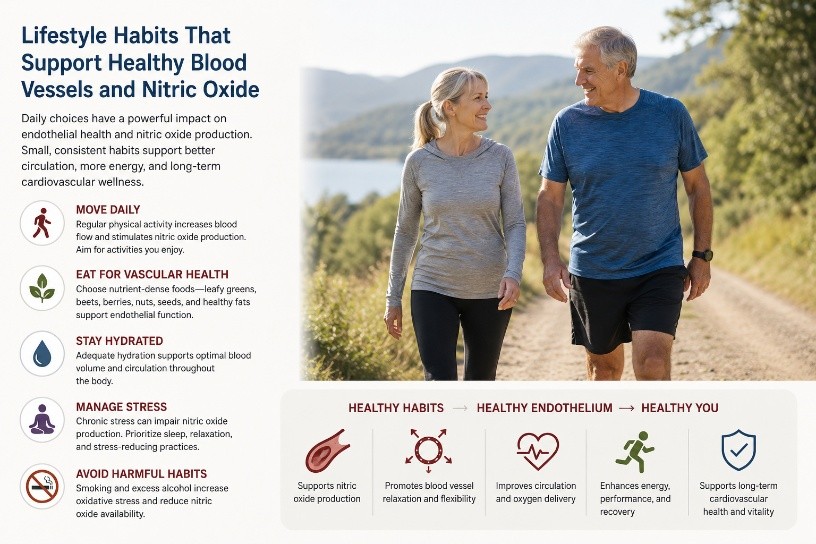
Movement is one of the most powerful natural stimulators of nitric oxide.
Physical activity increases blood flow across your artery walls, which helps stimulate endothelial function. Even relatively modest improvements in daily activity may positively influence vascular function over time.
- Walking
- Moderate cardio
- Resistance training
- Stretching
- Interval activity
- Daily movement
Certain foods may quietly support the nitric oxide pathway.
Nutrition alone is not a magic solution — but vascular health appears strongly influenced by long-term dietary patterns. Areas of active research include:
- —Leafy green vegetables
- —Beetroot and natural nitrates
- —Amino acids involved in nitric oxide pathways
- —Antioxidant-rich fruits and plant compounds
- —Polyphenols and flavonoids
- —Anti-inflammatory dietary patterns

What you should remember.
- 01The endothelium is a critical regulator of vascular health.
- 02Nitric oxide helps support healthy blood vessel function.
- 03Nitric oxide production may decline with age.
- 04Lifestyle factors strongly influence endothelial health.
- 05Circulation affects the entire body — not just the heart.
- 06Exercise, movement and nutrition play important roles.
You received this from someone who thought it might matter to you.
For more information refer to the person who shared this link.
Thank you for reading. Nitric oxide is one of the most important discoveries in modern physiology, and its relevance to overall health, wellness, natural energy and vitality, is only growing as the research deepens.